
Land & titles
How to check a land title in Uganda before you pay anything
A registry search, a deed plan and a walk around the boundary cost very little compared with what they protect. Here is exactly what to check and in what order.
Yellow Bricks Uganda team · 4 September 2026 · 4 min read

The most expensive words in Ugandan property are 'he showed me the title'. A photocopy proves that a document exists somewhere. It does not prove that the person holding it owns the land, that the land is where you think it is, or that nobody else has a claim on it. Verification is a process, and it is not a long one.
Step one: read the document you were given
Start with what is in front of you. A Ugandan title will tell you the tenure — freehold, mailo or leasehold — along with a plot and block number or a folio reference, the registered proprietor's name, the area of the land, and any encumbrances noted on it. Write those details down. You are going to compare them against three other things: the registry, the map, and the ground.
- Does the proprietor's name match the seller's identification exactly? Not nearly — exactly.
- Is the tenure what you were told it was?
- Is the stated area consistent with what you have been shown?
- Are there entries for a mortgage, caveat, lease or court order?
Step two: run an official search
A search at the land registry compares the copy you hold against the register itself. This is the step that catches forged titles, duplicate titles over the same plot, sales that were never registered, mortgages the seller forgot to mention, and caveats lodged by someone who believes they have a claim. Uganda's registry has been progressively digitised, and searches at zonal offices are far quicker than they once were.
Have your own lawyer do it, or attend the registry yourself. Do not accept a search result handed to you by the seller or the broker, however genuine it looks. The point of a search is independence.
A search is the cheapest thing in the transaction and the only one that can save all of it.
Step three: match the deed plan to the ground
A title refers to a survey. Ask for the deed plan or survey print and have a licensed surveyor place it on the actual land. You are checking that the plot you walked is the plot on the plan, that the corners are where the plan says, and that no neighbour's wall, road reserve, wetland buffer or power line sits inside your boundary.
This is the check people skip because it costs a little money and a little time. It is also the check that prevents the most common land dispute in Uganda: two people holding paperwork that overlaps on the ground.
Step four: ask about people, not just paper
Titles do not record everyone with rights. On mailo land there may be lawful or bona fide occupants whose interests are protected in law and invisible on the certificate. On family land, a spouse's consent is legally required. Where land is inherited, several beneficiaries may have to agree. So visit the land, speak to the neighbours and the local council chairperson, and ask directly: who lives here, who farms here, who else says this is theirs?
Step five: check what the land can be used for
- Zoning and physical planning: is residential, commercial or industrial use permitted here?
- Wetlands and reserves: land inside a protected wetland or a road reserve cannot be developed, whatever the title says.
- Leasehold conditions: how many years remain, and is there a development covenant you must meet?
- Access: is there a legal right of way to the plot, or does the only route cross private land?
- Rates and taxes: are ground rent, ground rates or property taxes outstanding?
Consider lodging a caveat
If you have paid a deposit and completion will take weeks, your lawyer can lodge a caveat on the title. It records your interest and prevents the property being transferred or mortgaged out from under you while you complete. It is a modest step that closes a real gap in the timeline.
Red flags that should stop a transaction
- A seller who resists an independent search, or wants payment before one.
- Identification that does not match the registered proprietor, with an explanation involving a relative or an old name.
- A title with a caveat the seller describes as 'a small misunderstanding'.
- Refusal to allow a surveyor onto the land.
- An unusually low price with urgency attached.
Every listing on Yellow Bricks Uganda starts from the same principle: the location is pinned, the boundary is drawn and measured, and ownership documents are reviewed privately before a listing goes live. We only mark a listing as title-checked when a person on our team has read the documents. Nothing replaces your own lawyer and your own search — but you should not have to start from zero either.
What this means for you
- Never pay anything before an independent registry search.
- Match the deed plan to the ground with a licensed surveyor.
- Ask who occupies and who must consent, including spouses and heirs.
- Check zoning, wetlands, access and leasehold conditions before you value the land.
- Lodge a caveat if there is a gap between deposit and completion.
Where Yellow Bricks fits
We are a fixed-fee estate agency built for Uganda: every listing starts with a pin on the map, a drawn and measured boundary, and ownership documents reviewed before it goes live. This article is general information, not legal or financial advice — use your own lawyer and surveyor.
Keep reading
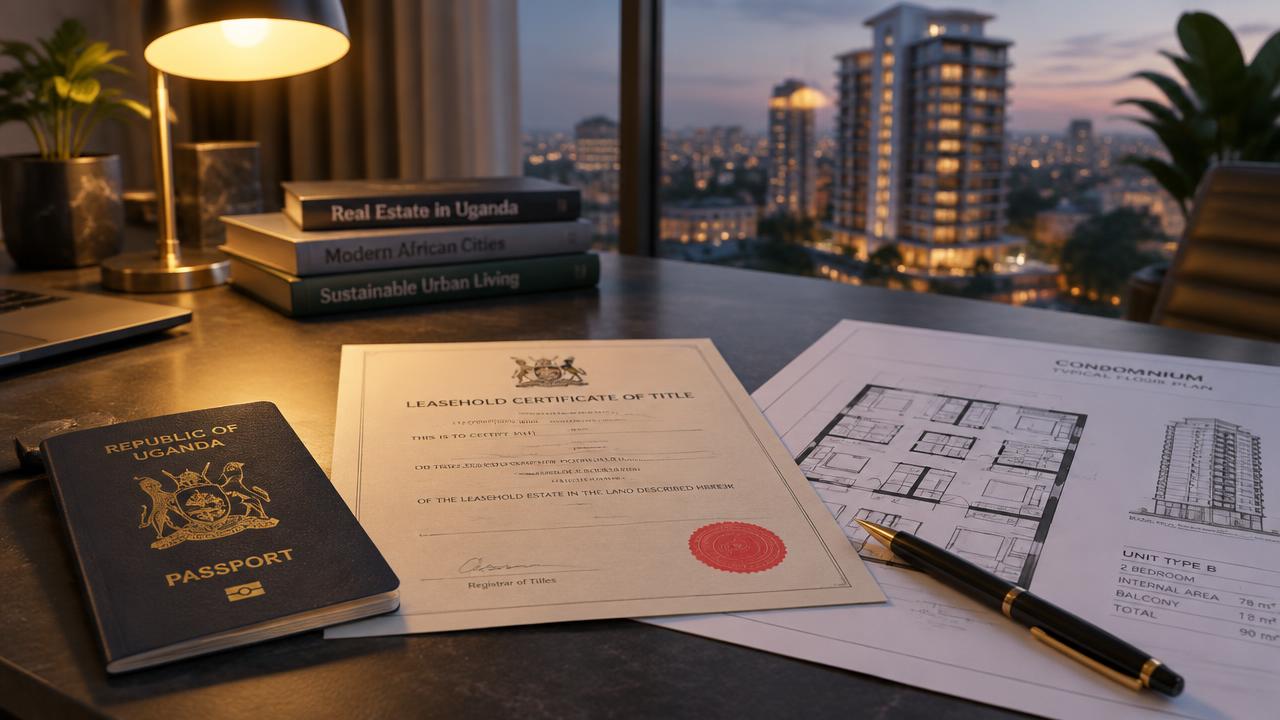
How foreigners can buy property in Uganda, legally
Non-citizens cannot hold mailo or freehold land in Uganda, but they can hold registered leases — which is why condominium apartments are usually the cleanest route. Here is the law and the order of checks.
20 September 2026 · 7 min read
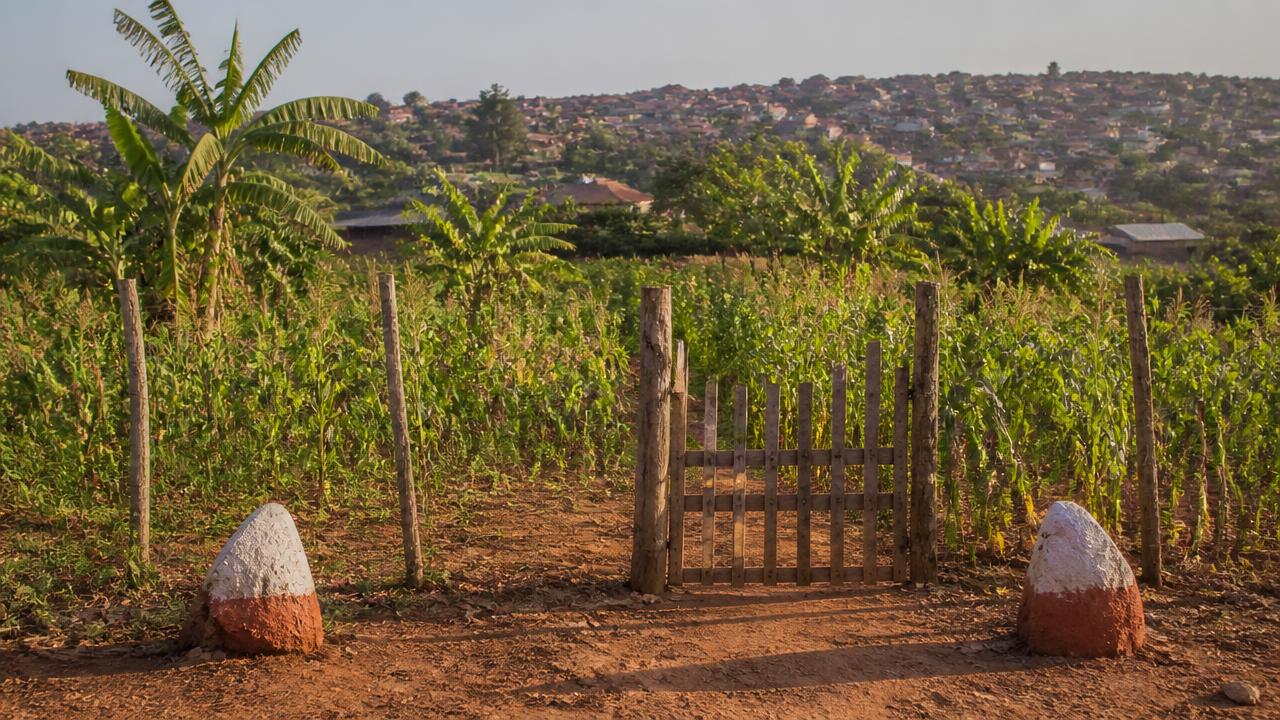
Kibanja land explained: what you are really buying
Thousands of Ugandan families live on kibanja land. It can be bought and sold safely, but only if you understand that you are buying an occupancy, not a title.
2 September 2026 · 4 min read

A short history of land ownership in Uganda
Mailo, freehold, leasehold and customary land all exist side by side in Uganda. Here is how that happened, and why it still shapes every sale today.
27 August 2026 · 4 min read