
Buying
Buying a home in Uganda, step by step
From first viewing to registered transfer: the order the steps should happen in, what each one costs you in time, and the points where buyers most often lose money.
Yellow Bricks Uganda team · 31 August 2026 · 4 min read

Most bad property outcomes in Uganda are not caused by fraud. They are caused by doing the right things in the wrong order — paying before checking, agreeing before measuring, trusting before verifying. This is the order that protects you.
1. Decide what you can actually complete on
Before you view anything, work out the total, not the price. Add the purchase price, stamp duty, registration and transfer costs, legal fees, a survey if the boundary needs confirming, the search, and any agreed commission. Then add a contingency, because in Uganda a boundary question or a missing consent can add both time and cost. If financing is involved, get an indication of what you can borrow before you fall in love with a house.
2. Search, and treat every listing as a claim
Search widely: portals, brokers, community and church networks, and simply driving the areas you like. Then treat everything you find as a claim rather than a fact. Is the property still available? Is the person advertising it instructed by the owner? Is the price the owner's price or the broker's? A property that three people are advertising at three prices is not three opportunities. It is one property and a warning.
3. View properly, and view twice
- Go once in daylight and once at another time — traffic, noise, water pressure and neighbours change through the day.
- Walk the whole boundary, not just the house. Ask where it ends and who says so.
- Check water and power: the source, whether it is metered, whether there is a tank, how often supply fails.
- Look at drainage and the ground during or after rain. Standing water tells you what a dry-season viewing hides.
- Ask about access: is the road public, or does it cross someone else's land?
4. Ask for the documents before you negotiate
You want to see what the seller has as early as possible: the title or certificate, the survey or deed plan, the previous sale agreement, and identification matching the name on the document. If the property is family land, you want to know who else must consent — spousal consent is a legal requirement for family land and its absence can undo a sale years later.
A seller who cannot show you what they own has not yet given you anything to buy.
5. Instruct a lawyer, and run a search
Engage your own lawyer — not the seller's, and not the broker's friend. Their first job is a search at the land registry to confirm the registered owner, the tenure, the boundaries as recorded, and whether there is a mortgage, caveat or pending court case on the property. A search is cheap relative to what it protects. Skipping it is the single most expensive decision buyers make.
6. Confirm the boundary on the ground
Titles describe land; they do not walk it. Where a plot is subdivided, unfenced, or larger than a small urban lot, have a surveyor confirm the boundary against the deed plan and mark it. This is where 'the plot is 50 by 100' turns out to mean something different from what you were shown. On land in particular, a mapped and measured boundary should be a condition of paying, not a task for afterwards.
7. Negotiate, then put it in writing
Negotiate on the whole picture: price, what is included, who pays which cost, and the timetable. Then have your lawyer prepare a sale agreement that records the parties, the property as described in the title, the price, the payment schedule, what happens to the deposit if either side fails to complete, and vacant possession. Verbal understandings evaporate exactly when they matter.
8. Pay in traceable stages
Pay through the bank, not in cash, and pay in stages linked to milestones: a deposit on signing, the balance on transfer documents being executed and lodged. Get a receipt for every payment, and never pay a person whose name is not on the agreement. Cash paid to an intermediary with no paper trail is the hardest loss to recover.
9. Complete the transfer and register it
Completion is not the handover of keys. It is stamp duty assessed and paid, transfer forms executed, consent obtained where required, and the transfer lodged and registered so the register shows your name. Until that happens, you have an agreement, not ownership. Follow it through, and keep copies of everything.
Where deals most often go wrong
- Paying a deposit before any search has been done.
- Buying from one family member where several have rights, or without spousal consent on family land.
- Accepting a photocopied title without verifying the original at the registry.
- Assuming a kibanja is the same as a titled plot.
- Leaving the transfer unregistered because the paperwork was tiring.
What this means for you
- Check before you pay: search, boundary, consents. In that order, every time.
- Use your own lawyer and budget for the full cost, not just the price.
- Pay traceably, in stages, only to the named seller.
- Do not stop at the sale agreement — register the transfer.
Where Yellow Bricks fits
We are a fixed-fee estate agency built for Uganda: every listing starts with a pin on the map, a drawn and measured boundary, and ownership documents reviewed before it goes live. This article is general information, not legal or financial advice — use your own lawyer and surveyor.
Keep reading
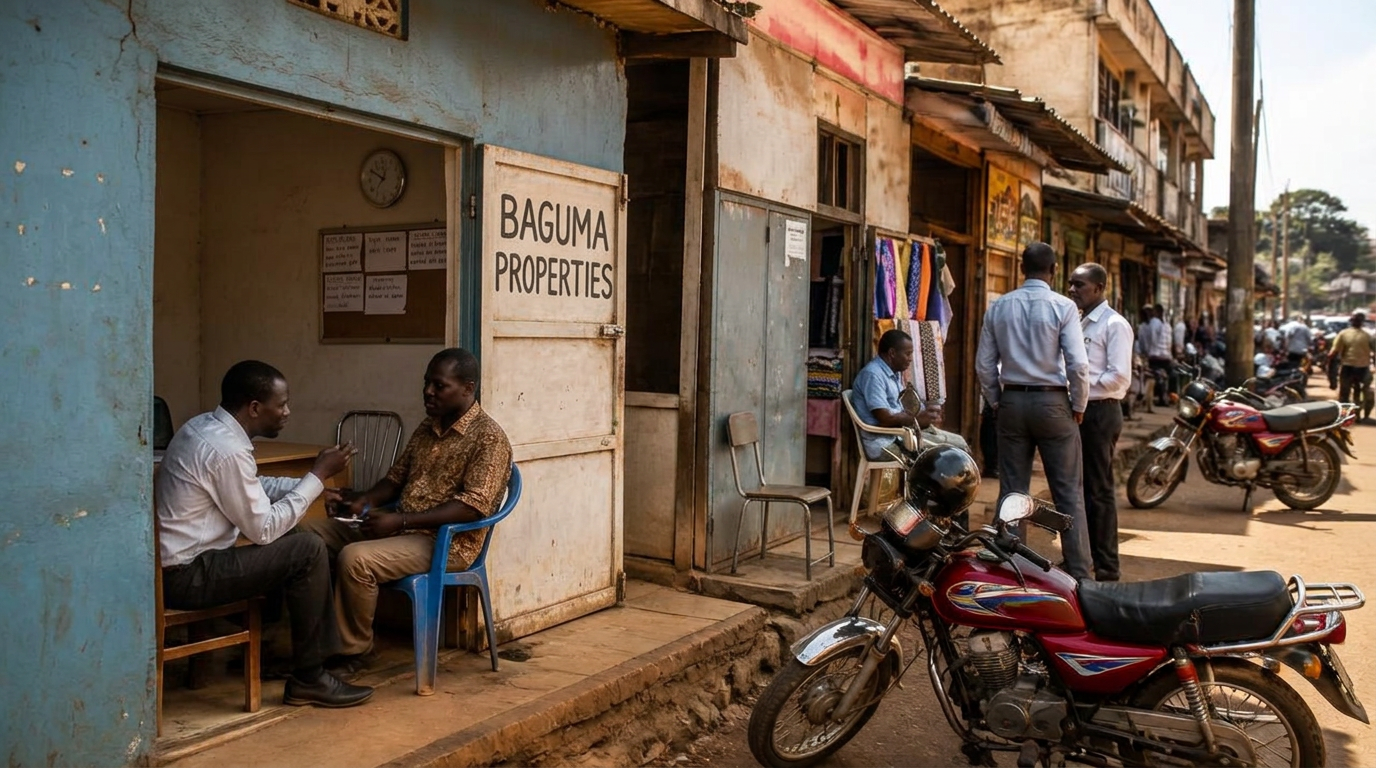
How Uganda's property market actually works, and who gets paid
There is no single property market in Uganda — there are several overlapping ones. Here is who is involved at each stage, and where money quietly leaves the table.
29 August 2026 · 4 min read
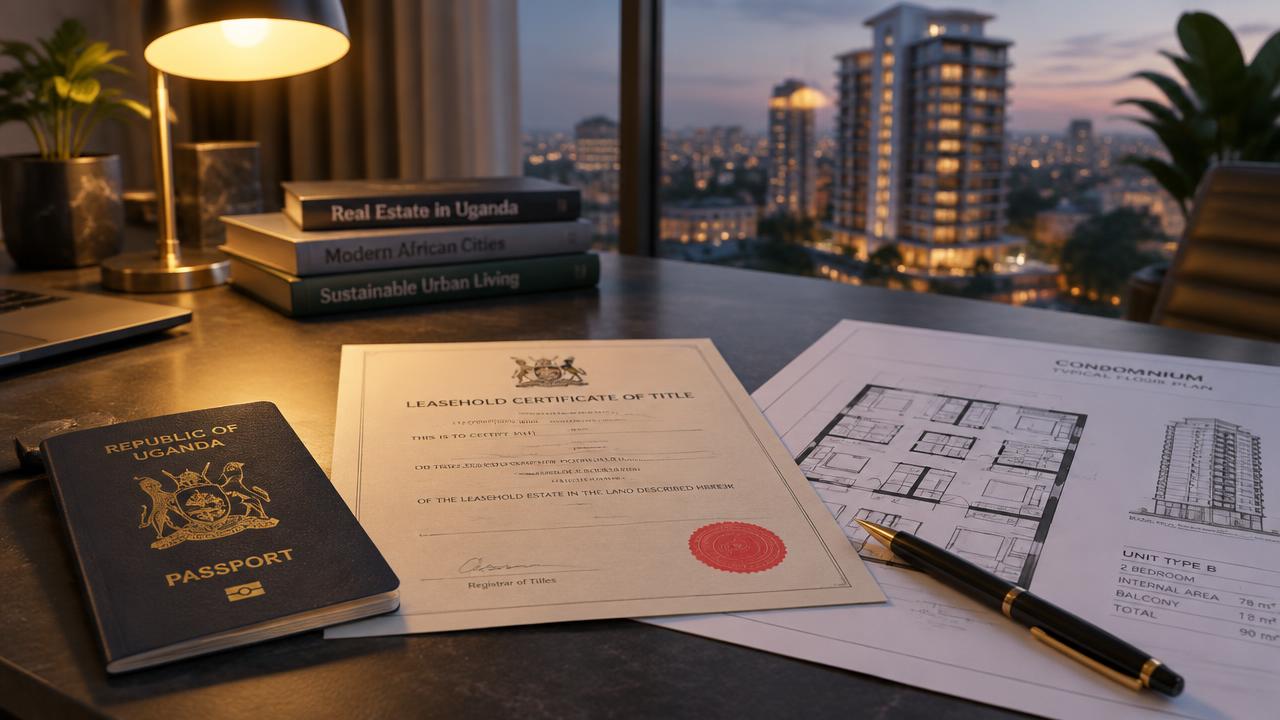
How foreigners can buy property in Uganda, legally
Non-citizens cannot hold mailo or freehold land in Uganda, but they can hold registered leases — which is why condominium apartments are usually the cleanest route. Here is the law and the order of checks.
20 September 2026 · 7 min read

Ugandan property as an investment: what diaspora and foreign buyers should model
Rent is collected in shillings, the investor usually thinks in dollars, and the costs people forget are the ones that decide the return. An honest framework for buying from abroad.
20 September 2026 · 5 min read