
Selling
What it really costs to sell a home in Uganda
Percentage commission was designed for a market that no longer needs it. Here is what selling actually involves, what it costs, and why a fixed fee changes the arithmetic.
Yellow Bricks Uganda team · 6 September 2026 · 4 min read

Ask five Ugandan sellers what they paid an agent and you will get five answers. Commission here is negotiated, not published, and it is normally a percentage of the sale price. That structure has one striking feature: the fee grows with the value of your house even though the work does not.
What selling a house actually involves
- Pricing it — comparing recent sales and asking prices in the same area.
- Photographs and a written description.
- Advertising it where buyers are looking.
- Answering enquiries, filtering out the unserious, and arranging viewings.
- Conducting viewings and following up.
- Handling offers and negotiating.
- Coordinating with lawyers, surveyors and any lender until completion.
Read that list again and ask which item becomes three times harder because the house is worth three times more. The photographs are the same job. The viewings take the same afternoon. The phone calls are the same phone calls. There is a real difference in the negotiation and in the calibre of buyer to be found, but it is nothing like proportional.
A percentage fee prices your agent's work according to your family's wealth, not according to the work.
The arithmetic of a percentage
Take a home priced at UGX 500,000,000 — a realistic figure for a good family house in a well-served Kampala suburb. At a 3% commission, the fee is UGX 15,000,000. At 5%, it is UGX 25,000,000. That money comes out of the equity you were planning to put into the next house, the school fees, or the business. Those percentages are illustrative rather than a published market rate, because no such published rate exists in Uganda — but they are the range sellers are routinely quoted.
A fixed fee inverts the question. Instead of asking what proportion of your home the agent should take, it asks what the job is worth. Our packages start at a published fixed fee and do not change with your asking price. On the same UGX 500,000,000 house, the difference is not a rounding error — it is most of a plot of land.
The other costs, which are real and worth paying
Commission is not the only cost of selling, and the rest of the list deserves respect rather than avoidance.
- Legal fees for preparing and executing the sale and transfer documents.
- A survey, if the boundary needs confirming or the plot is being subdivided.
- Outstanding ground rent, ground rates or property taxes, cleared before transfer.
- Consents where required — spousal consent on family land, a landlord's consent on leasehold or kibanja.
- Modest preparation costs: repairs, paint, clearing the compound, tidying the approach.
- Capital gains tax, which can apply where the property is a business or investment asset rather than your home. Take advice on your own position.
Stamp duty and registration on the transfer are ordinarily borne by the buyer, but who pays what is one of the terms of the deal, so agree it in writing rather than assuming.
Why an unclear fee costs you twice
An undisclosed or shared commission does more damage than its size suggests. If two or three intermediaries are quietly splitting a fee, the incentive is to close any sale rather than the best sale, and to keep buyer and seller apart. Sellers discover this when a low offer is presented enthusiastically and a better enquiry never arrives.
The remedy is not distrust. It is documentation: one written instruction, one named party, one stated fee, and a rule that any other person involved must be disclosed to you.
What to insist on before you instruct anyone
- The fee in writing, in shillings, with what is included and when it is payable.
- Whether the instruction is exclusive, and for how long.
- Whether anyone else will share the fee, and who.
- How the property will be advertised, and where.
- How and when you will hear about enquiries and offers — a weekly written update is not much to ask.
- What happens if you withdraw, and what happens if the sale falls through after an offer.
Selling a home is a large financial event in most Ugandan families' lives, and it is nearly always done under time pressure — a move, a school year, a business need. The single best protection is boring: get the fee and the terms on paper before anything else happens.
What this means for you
- Compare the fee in shillings, not in percentages. Percentages hide the size of the number.
- Ask what the fee buys and who else shares it.
- Budget separately for legal fees, survey, arrears and consents — those costs are real.
- Get the instruction, duration and fee in writing before any photographs are taken.
- Agree in writing which side pays stamp duty and registration.
Where Yellow Bricks fits
We are a fixed-fee estate agency built for Uganda: every listing starts with a pin on the map, a drawn and measured boundary, and ownership documents reviewed before it goes live. This article is general information, not legal or financial advice — use your own lawyer and surveyor.
Keep reading
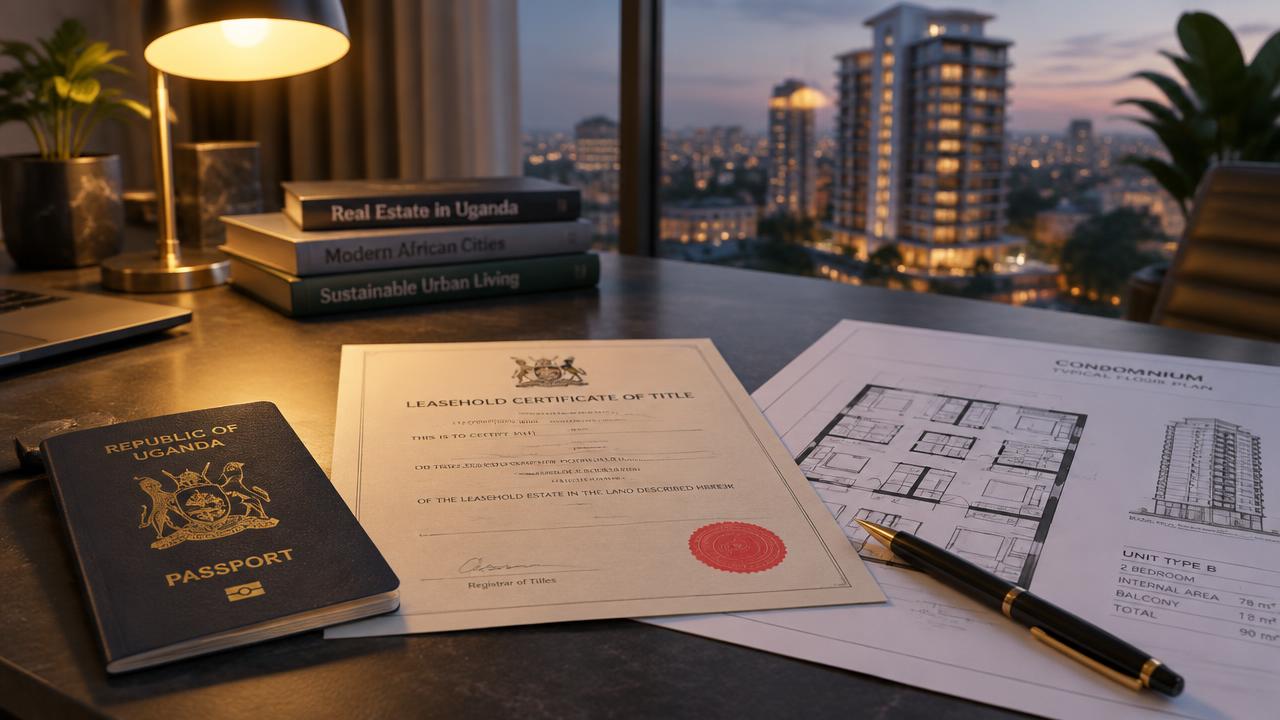
How foreigners can buy property in Uganda, legally
Non-citizens cannot hold mailo or freehold land in Uganda, but they can hold registered leases — which is why condominium apartments are usually the cleanest route. Here is the law and the order of checks.
20 September 2026 · 7 min read

Ugandan property as an investment: what diaspora and foreign buyers should model
Rent is collected in shillings, the investor usually thinks in dollars, and the costs people forget are the ones that decide the return. An honest framework for buying from abroad.
20 September 2026 · 5 min read
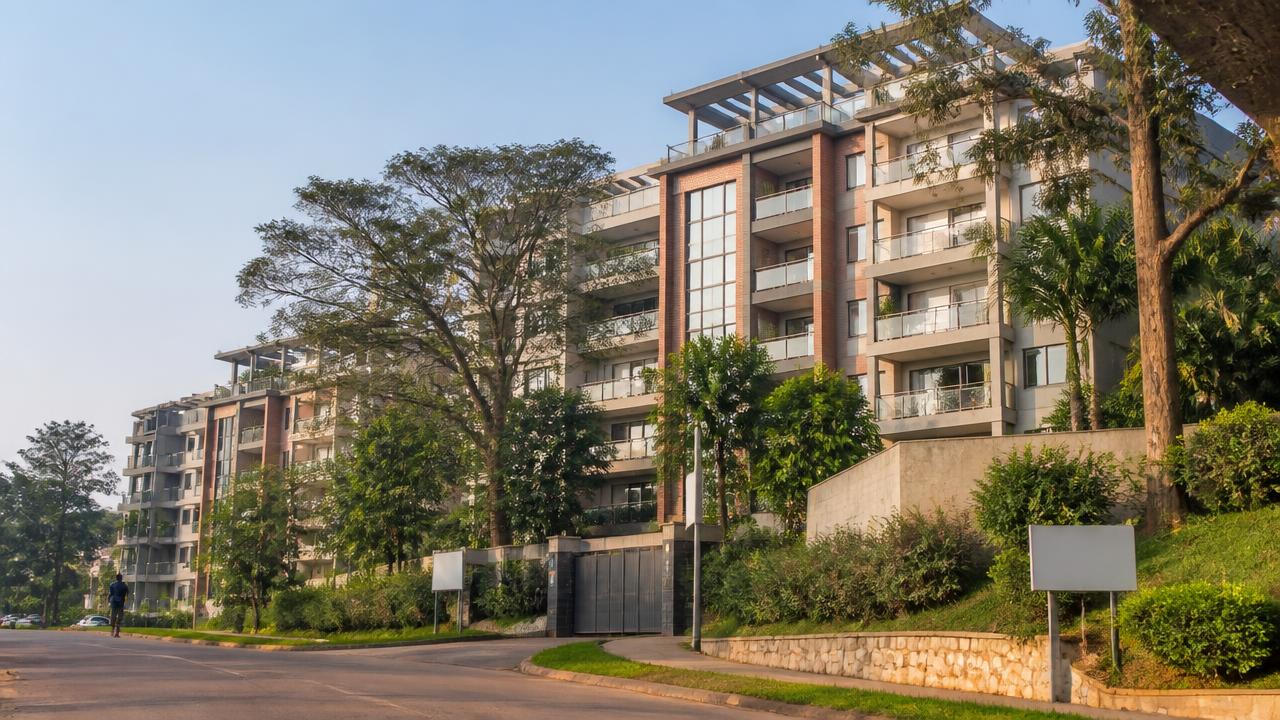
Kampala rents have turned in the tenant's favour — what the numbers say
Prime two-bedroom rents fell about 10% and three-bedroom rents about 9% over the year, while occupancy edged up. Here is what that means if you are renting or letting a home in Kampala today.
15 September 2026 · 3 min read