
Market data
What it costs to borrow for property in Uganda right now
The Central Bank Rate sat at 9.75% while banks lent shillings at an average 19.07%. Here is why property borrowing is expensive, who is getting approved, and what to ask a bank before you sign.
Yellow Bricks Uganda team · 11 September 2026 · 3 min read

Ask why so many Ugandan property purchases are paid in cash or in instalments to the seller, and the answer is usually in the interest rate. Knight Frank Uganda's H2 2025 review sets out the numbers, and they explain a great deal about how the market behaves.
- Central Bank Rate, held through H2 2025
- 9.75%
- Central Bank Rate, held through H2 2025
- Average shilling lending rate, up from 18.55%
- 19.07%
- Average shilling lending rate, up from 18.55%
- Average foreign-currency lending rate, down from 8.99%
- 8.37%
- Average foreign-currency lending rate, down from 8.99%
- Credit application approval rate, up from 63.9%
- 65.1%
- Credit application approval rate, up from 63.9%
Source: Knight Frank Uganda, Kampala Property Market Performance Review, H2 2025, citing Bank of Uganda data.
A stable policy rate, an expensive loan
The Bank of Uganda kept the Central Bank Rate at 9.75% throughout the second half of 2025, unchanged since October 2024, with headline and core inflation both at 3.1% in December. Stability at the top did not translate into cheaper credit: commercial banks' shilling lending rates rose to a weighted average of 19.07%, up from 18.55%. Foreign-currency lending went the other way, easing to 8.37% from 8.99%.
Weighted average rates reported for H2 2024 and H2 2025.
Source: Knight Frank Uganda, Kampala Property Market Performance Review, H2 2025, citing Bank of Uganda data.
The gap between those two lines is the single most consequential number in Ugandan property finance. Borrowing dollars looks less than half the price of borrowing shillings — until the shilling moves against you and your income is still in shillings. The report notes the shilling appreciated 2.4% in the year to December 2025, which was helpful, but nobody should treat a year of currency strength as a plan.
Credit is growing, and property has a share of it
Private sector credit stood at UGX 24.1 trillion, split 71.98% in shillings (UGX 17.3 trillion) and 28.02% in foreign currency (UGX 6.7 trillion). Total credit applications rose to UGX 13.6 trillion from UGX 11.6 trillion a year earlier, of which UGX 9.1 trillion was approved — a 65.1% approval rate, up from 63.9%. Building, mortgage, construction and real estate took 12.68% of credit; personal and household loans remained the largest single share at 27.92%.
Selected sector shares reported for H2 2025.
| Sector | Share of private sector credit |
|---|---|
| Personal and household | 27.92% |
| Building, mortgage, construction and real estate | 12.68% |
| Transport, communications, electricity and water | 6.16% |
Source: Knight Frank Uganda, Kampala Property Market Performance Review, H2 2025, citing Bank of Uganda data.
At around 19% a year, a loan does not just cost you interest. It quietly decides how big a house you are allowed to want.
What a 19% loan actually feels like
Work it through in your head rather than trusting a brochure. At a rate near 19%, the interest in the early years dwarfs the amount coming off the balance, so the loan barely shrinks at first. That is why lenders here favour shorter terms, why deposits are large, and why so many buyers stage a purchase — buying land first, then building over several years as cash allows. That path avoids interest but carries its own risks, especially if the title is not clean.
Questions worth asking any lender
- Is the rate fixed or variable, and if variable, what is it tied to?
- What is the total cost including arrangement fees, valuation, legal fees, insurance and stamp duty?
- What deposit do you require, and against what valuation figure?
- What is the longest term you will offer, and what does that do to the monthly payment?
- If I borrow in dollars, what happens to my repayment if the shilling weakens by 10%?
- What happens if I repay early — is there a penalty?
Shariah-compliant finance
Many Ugandans want a home finance arrangement that does not pay or charge interest. Yellow Bricks Uganda does not have a finance partnership in place, and we will not pretend otherwise or name providers we have no agreement with. What we do have is a waiting list: register your interest and we will contact you if and when a genuine Shariah-compliant option becomes available through us. Anything on our site describing costs is illustrative, not an offer.
What this means for you
- Policy rate 9.75%, but shilling loans averaged 19.07% — up on the year.
- Foreign-currency loans averaged 8.37%, cheaper on paper and riskier if your income is in shillings.
- Private sector credit reached UGX 24.1 trillion; approvals rose to 65.1% of applications.
- Property-related lending is 12.68% of credit — real, but a small slice.
- Compare total cost, not headline rate, and take professional advice before committing.
This is general information, not financial advice. Speak to your bank and, for anything touching title or contracts, a lawyer. The full review is published by Knight Frank Uganda at knightfrank.ug.
Where Yellow Bricks fits
We are a fixed-fee estate agency built for Uganda: every listing starts with a pin on the map, a drawn and measured boundary, and ownership documents reviewed before it goes live. This article is general information, not legal or financial advice — use your own lawyer and surveyor.
Keep reading
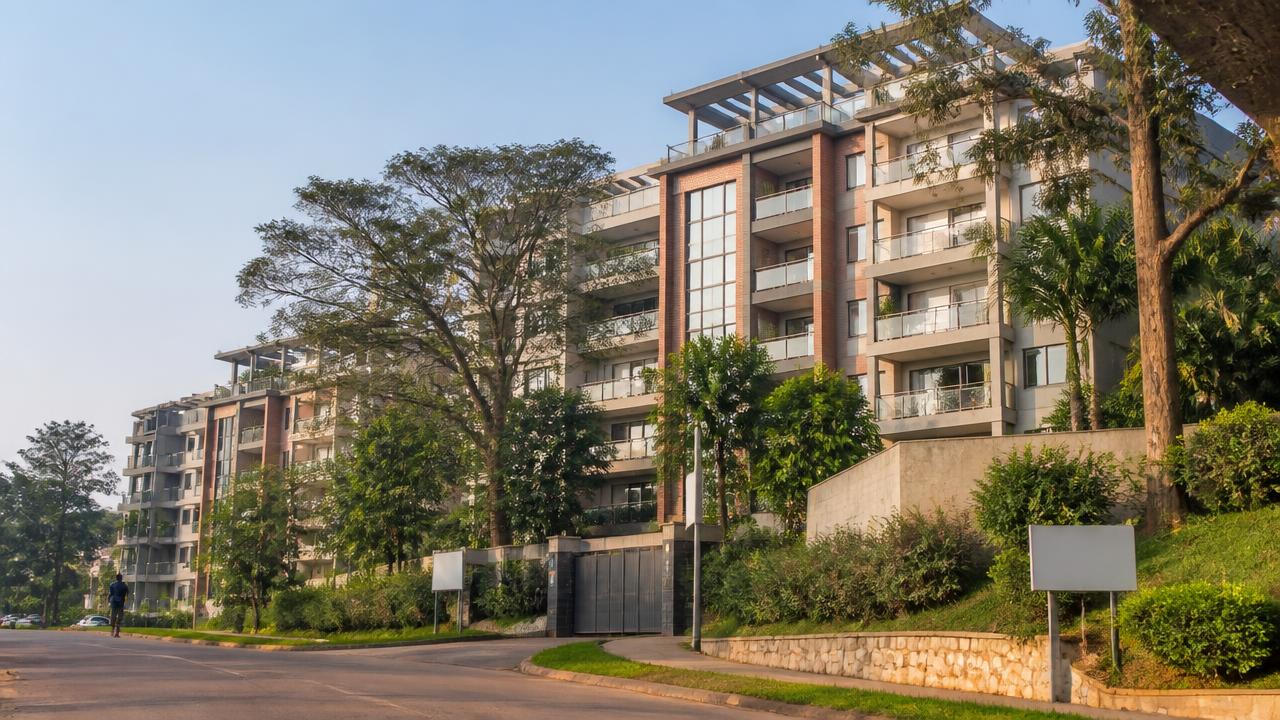
Kampala rents have turned in the tenant's favour — what the numbers say
Prime two-bedroom rents fell about 10% and three-bedroom rents about 9% over the year, while occupancy edged up. Here is what that means if you are renting or letting a home in Kampala today.
15 September 2026 · 3 min read
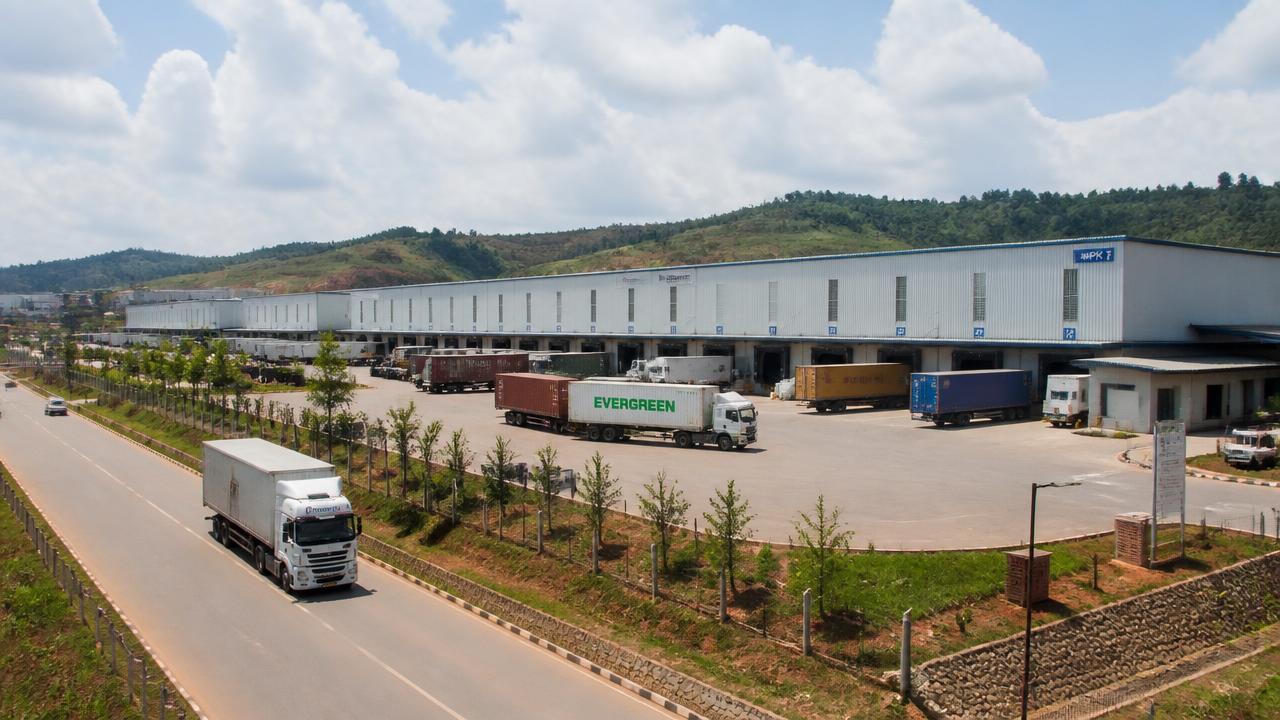
Where the money is going: warehouses and suburban retail are outperforming homes
While prime home rents fell, industrial occupancy held above 80% and mall footfall rose about 15%. A look at which parts of Kampala property are actually working, and what that means for ordinary investors.
13 September 2026 · 3 min read

The economy behind Uganda's property market: 6.3% growth, 3.1% inflation, a steady shilling
Growth of 6.3%, inflation at 3.1%, a shilling up 2.4% and a record balance of payments surplus. The macro picture that sits underneath every rent, price and loan in Kampala.
9 September 2026 · 3 min read